

Takeaway
- Explosion venting panels fall under ATEX Directive 2014/34/EU as "protective systems" and require CE marking, EU declaration of conformity and technical documentation before being placed on the market.
- EN 14491/EN 14994 defines the criteria for sizing the vent area; EN 14797 establishes the construction and testing requirements for the venting devices themselves, including verification of the static activation pressure p_stat.
- Correct installation requires documenting the discharge direction, resistance to reaction forces, and compatibility with the classified ATEX zone (zone 20/21/22 for dusts, zone 0/1/2 for gases).
The Regulatory Framework: Two Directives, Distinct Objectives
When discussing explosion protection in European industrial settings, the first point to clarify is that no single standard covers everything. There are two European directives with complementary but distinct purposes, and confusing them is a mistake that occurs more often than one might expect.
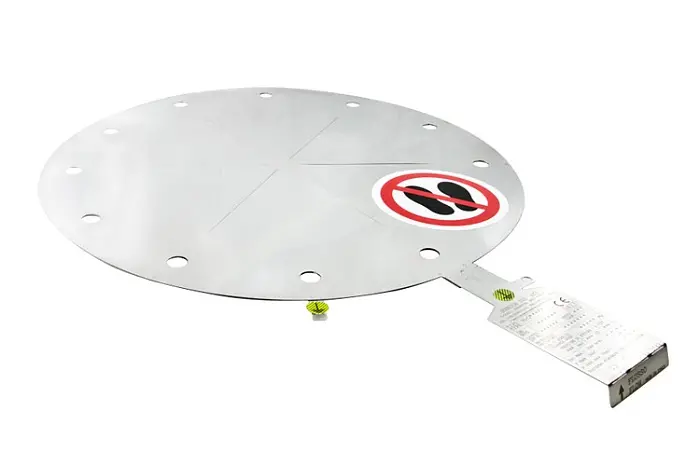
Directive 2014/34/EU (commonly known as the ATEX Products Directive, in force since 20 April 2016, replacing the previous 94/9/EC) is addressed to manufacturers: it establishes the requirements that equipment and protective systems must meet to be placed on the European market. Explosion venting panels fall explicitly within this framework as “protective systems” — devices intended to halt or contain an incipient explosion. They therefore require CE marking, an EU declaration of conformity and a technical file.
Directive 99/92/EC (the ATEX Workplace Directive, implemented in EU member states through national legislation) is addressed to employers and plant operators: it mandates the classification of explosion risk zones, the preparation of an explosion protection document, and the selection of equipment compatible with the classified zone. It is this directive that obliges the installation of adequate protective systems — including venting panels — and requires that the selection be documented in a traceable manner.
The two directives do not overlap: they operate on different planes (product vs. use) and are complementary. A venting panel compliant with 2014/34/EU is fit for market placement, but it is the plant operator’s responsibility to verify that it is suited to the specific classified zone and correctly sized.
Directive 2014/34/EU Applied to Explosion Venting Panels: What It Means in Practice
Classification as a Protective System
Explosion venting panels belong to the category of protective systems (Article 2 of the Directive): autonomous devices intended to halt incipient explosions immediately and limit their effects. As such, they do not fall under the category of “equipment” (which covers machinery and devices with their own potential ignition sources), but they still follow a conformity assessment procedure that, for the most critical categories, requires the involvement of a notified body.
The subdivision into categories (1, 2, 3) based on the zone of use (zone 20/21/22 for dusts, zone 0/1/2 for gases and vapours) determines the applicable certification procedure. A venting panel intended for zone 20 (continuous or frequent presence of explosive dust cloud) requires a more stringent procedure than one for zone 22 (occasional presence of short duration).
CE Marking and Mandatory Documentation
EN 14797 and EN 14491/EN 14994: The Key Technical Standards
EN 14797: Requirements for the Venting Device
While EN 14491/EN 14994 addresses the sizing of the overall venting system (how much area to open and how), EN 14797 focuses on the venting device itself: it establishes the construction requirements, the tests to be performed, and the parameters to be declared for every panel placed on the market. Key parameters that the manufacturer must declare and verify experimentally include the static activation pressure (p_stat) and its tolerance, resistance to the reaction forces generated by opening, resistance to negative pressure (vacuum resistance) where applicable, and panel behaviour under extreme operating temperature conditions.
This standard is the one directly linked to the ATEX Directive for the certification of panels as protective systems: application of EN 14797, together with EN 14491/EN 14994, forms the basis for presumption of conformity with the essential safety requirements of Directive 2014/34/EU.
EN 14491/EN 14994: Sizing the Vent Area
As covered in the pillar article on explosion venting panels, EN 14491/EN 14994 provides the calculation criteria for determining the minimum vent area required to protect equipment containing combustible dust/gas. In summary, the standard requires knowledge of: the volume of the enclosure to be protected (V), the maximum explosion pressure (Pmax) and deflagration index (Kst) of the specific dust or deflagration index (Kg) of the specific gas, the structural resistance of the enclosure (Pred), and the panel’s activation pressure (p_stat). These parameters feed into calculation equations that return the minimum required vent area (Av). The standard also includes specific annexes for bag filters, cyclones and storage silos, and provides corrections for the presence of vent ducts, elongated enclosures and partial fill conditions.
ATEX Zone Classification and Venting Panel Compatibility
- Zone 20: continuous or frequent presence of an explosive dust cloud in air during normal operation. Typically the interior of silos, hoppers, mixers and filters during the process.
- Zone 21: occasional presence of an explosive dust cloud under normal operating conditions. For example, areas immediately adjacent to loading/unloading points, or filters during cleaning cycles.
- Zone 22: presence of an explosive dust cloud under abnormal conditions, for a short duration. Often the external area around plant equipment, near openings or vents.
Design Guidelines for Correct Installation
Beyond selecting a certified and correctly sized panel, there are several design considerations that EN 14491/EN 14994 and industry guidelines highlight, which are useful to keep in mind from the earliest stages of the project.
The discharge direction must be defined to avoid areas frequented by personnel, adjacent equipment and possible secondary ignition sources. In many indoor plants this necessitates the use of vent ducts, which however affect the vent area calculation: the additional resistance introduced by the duct increases the reduced pressure Pred, generally requiring a larger vent area compared to direct outdoor discharge.
Designer Responsibilities and Documentation to Retain
One aspect that deserves specific attention — and is frequently underestimated in project specifications — concerns the distribution of responsibilities between the panel manufacturer, the protection system designer, and the plant operator.
- The manufacturer certifies the device according to EN 14797 and declares the technical parameters (p_stat, max Pred, mechanical resistance).
- The designer is responsible for sizing according to EN 14491/EN 14994 and for selecting a panel with the correct parameters for that specific application.
- The operator is responsible for installation in accordance with the manufacturer’s instructions, periodic maintenance, and panel replacement after every activation.
For an ATEX inspection or safety audit, the minimum documentation to retain includes:
- the panel’s CE certificate (with notified body number and category)
- the manufacturer’s EU declaration of conformity
- the sizing calculation according to EN 14491/EN 14994 with parameters Kst, Kg, Pmax, Pred and p_stat
- the inspection and replacement log
FAQ
Yes. ATEX classification applies to the inside of the protected equipment, not the external environment. If the interior of the silo is zone 20 or 21, the venting panel must be a protective system certified under Directive 2014/34/EU for that category, regardless of whether the silo is located outdoors.
An unintended opening must be treated as a full activation: the plant must be shut down, the panel replaced, and the opened panel examined to rule out defects or incorrect calibration. If unintended openings recur, the likely cause is a p_stat too close to the maximum operating pressure — the sizing or process conditions need to be reviewed.
EN 14491/EN 14994 does not impose this as a binding requirement, but the ATEX Workplace Directive obliges the employer to assess and document all protective measures adopted. In many sectors, failure to detect an activation carries the risk of leaving the plant operating without protection. For this reason, installing a rupture indicator should be considered an essential best practice in any plant that does not have continuous pressure monitoring systems.